LIB · V Øyvind Kvalnes, 2023
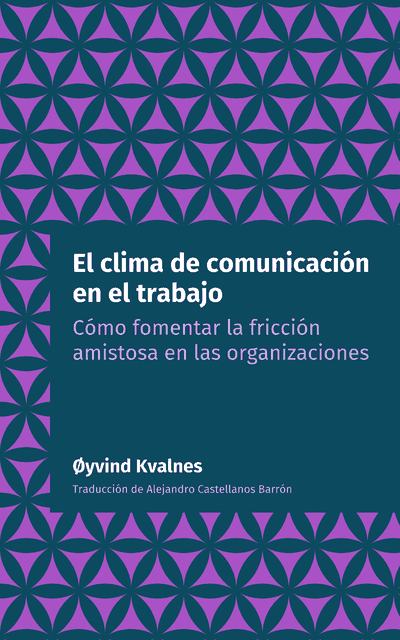
El clima de comunicación en el trabajoCommunication Climate at Work
Cómo fomentar la fricción amistosa en las organizaciones
Fostering friendly friction in organizations (Spanish edition)
También en AmazonAlso on Amazon
Este libro se vende solo en Amazon: para Kindle y en pasta blanda. La compra, el pago y la entrega se hacen allá.
This book is sold only on Amazon, for Kindle and in paperback. Purchase, payment and delivery happen there. The book is in Spanish.
¿Por qué las personas se callan en el trabajo justo cuando una palabra a tiempo podría cambiar el resultado? ¿Y qué hace falta para que hablar sea normal y seguro?
Why do people stay silent at work just when a timely word could change the outcome? And what does it take for speaking up to be normal and safe?
Øyvind Kvalnes, profesor de la BI Norwegian Business School, llama clima de comunicación a la manera en que los miembros de una organización se hablan entre sí: el clima para expresar inquietudes y desacuerdos, y también para expresar apoyo, elogio y aprecio.
Øyvind Kvalnes, a professor at BI Norwegian Business School, calls communication climate the way the members of an organization talk to each other: the climate for voicing concerns and disagreement, and also for expressing support, praise and appreciation.
El libro tiene tres partes. La primera explica por qué importa el clima de comunicación: los momentos críticos de calidad, el efecto espectador, el gorila invisible, los puntos ciegos y la dificultad de pedir y ofrecer ayuda. La segunda describe cinco cualidades de los climas de comunicación que funcionan bien: la fricción amistosa, la tolerancia a las falsas alarmas, la seguridad psicológica, el margen de acción y pulsar los botones positivos de los demás. La tercera trata la ética de la comunicación: la libertad y la responsabilidad de expresión, cómo contrarrestar la neutralización moral y la denuncia de irregularidades.
The book has three parts. The first explains why communication climate matters: critical moments of quality, the bystander effect, the invisible gorilla, blind spots and the difficulty of asking for and offering help. The second describes five qualities of communication climates that work well: friendly friction, tolerance for false alarms, psychological safety, room for action and pushing other people’s positive buttons. The third deals with the ethics of communication: freedom and responsibility of expression, how to counter moral neutralization, and whistleblowing.
Los capítulos se apoyan en casos como el accidente aéreo de Tenerife, el escándalo de las emisiones de Volkswagen y el fraude científico de Diederik Stapel.
The chapters draw on cases such as the Tenerife air disaster, the Volkswagen emissions scandal and the scientific fraud of Diederik Stapel.
Esta edición traduce al español Communication Climate at Work: Fostering Friendly Friction in Organisations (Cham, Palgrave Macmillan, 2023), que se publicó en acceso abierto con la licencia Creative Commons Atribución 4.0; el original en inglés se puede leer gratis en Springer. Ni el autor ni la editorial original participaron en esta edición ni la respaldan. Traducción de Alejandro Castellanos Barrón (2026).
This edition translates Communication Climate at Work: Fostering Friendly Friction in Organisations (Cham, Palgrave Macmillan, 2023) into Spanish. The original was published open access under the Creative Commons Attribution 4.0 license and can be read for free in English at Springer. Neither the author nor the original publisher took part in this edition or endorses it. Translation by Alejandro Castellanos Barrón (2026).
Cómo se hizoHow it was made
La traducción se preparó con ayuda de inteligencia artificial, siguiendo un glosario escrito para esta edición.
The translation was prepared with the help of artificial intelligence, following a glossary written for this edition.
El texto inglés se tomó de la edición de acceso abierto de Springer y se cotejó con su PDF oficial. Las tres tablas se compusieron de nuevo y la figura 12.1 se volvió a dibujar.
The English text was taken from Springer’s open-access edition and checked against its official PDF. The three tables were typeset again and figure 12.1 was redrawn.