LIB · VII Øyvind Kvalnes, 2017
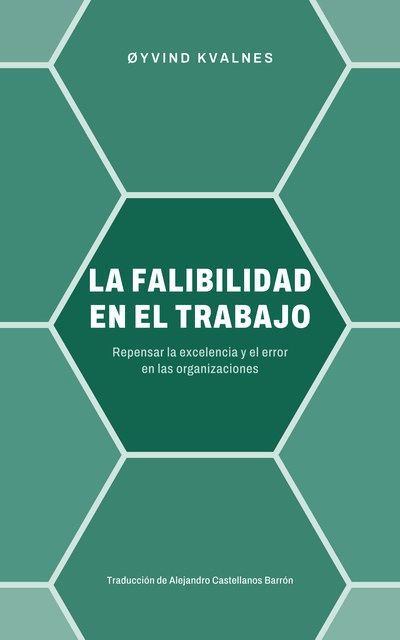
La falibilidad en el trabajoFallibility at Work
Repensar la excelencia y el error en las organizaciones
Rethinking excellence and error in organizations (Spanish edition)
También en AmazonAlso on Amazon
Este libro se vende solo en Amazon: para Kindle, en pasta blanda y en pasta dura. La compra, el pago y la entrega se hacen allá.
This book is sold only on Amazon, for Kindle, in paperback and in hardcover. Purchase, payment and delivery happen there. The book is in Spanish.
Una noche, en el aeropuerto de Oslo, el conductor del tractor de remolque vio que algo goteaba de un ala y se lo dijo al piloto. El piloto quiso despegar. El conductor insistió, y el piloto acabó por escucharlo. ¿Qué hace falta para que un error se detecte, se diga y se corrija a tiempo?
One night at Oslo airport, the tow-tractor driver saw something dripping from a wing and told the pilot. The pilot wanted to take off. The driver insisted, and the pilot finally listened. What does it take for an error to be detected, voiced and corrected in time?
Øyvind Kvalnes, profesor de la BI Norwegian Business School, parte de una idea antigua, que todo conocimiento humano es falible, y explora cómo el manejo de la falibilidad afecta la calidad de lo que las personas intentan lograr juntas en el trabajo.
Øyvind Kvalnes, a professor at BI Norwegian Business School, starts from an old idea, that all human knowledge is fallible, and explores how the handling of fallibility affects the quality of what people try to achieve together at work.
El libro recorre siete escenarios: el juego arriesgado en la infancia como preparación para la vida adulta; fallar rápido en los procesos de innovación; el riesgo moral y la suerte moral en una residencia para personas mayores; la aviación y su manera de afrontar el error humano; la falibilidad y la confianza en la atención sanitaria, con relatos de médicos; la ayuda dentro de las organizaciones, pedirla y ofrecerla, y la ética de la falibilidad: la neutralización moral y el perdón.
The book goes through seven settings: risky play in childhood as preparation for adult life; failing fast in innovation processes; moral risk and moral luck in a nursing home; aviation and its way of dealing with human error; fallibility and trust in healthcare, with doctors’ accounts; help within organizations, asking for it and offering it; and the ethics of fallibility: moral neutralization and forgiveness.
Esta edición traduce al español Fallibility at Work: Rethinking Excellence and Error in Organizations (Cham, Palgrave Macmillan, 2017), que se publicó en acceso abierto con la licencia Creative Commons Atribución 4.0; el original en inglés se puede leer gratis en Springer. Ni el autor ni la editorial original participaron en esta edición ni la respaldan. Traducción de Alejandro Castellanos Barrón (2026).
This edition translates Fallibility at Work: Rethinking Excellence and Error in Organizations (Cham, Palgrave Macmillan, 2017) into Spanish. The original was published open access under the Creative Commons Attribution 4.0 license and can be read for free in English at Springer. Neither the author nor the original publisher took part in this edition or endorses it. Translation by Alejandro Castellanos Barrón (2026).
Cómo se hizoHow it was made
La traducción se preparó con ayuda de inteligencia artificial, siguiendo un glosario escrito para esta edición.
The translation was prepared with the help of artificial intelligence, following a glossary written for this edition.
El texto inglés se tomó de la edición de acceso abierto de Springer: los capítulos, de sus páginas web, y los agradecimientos y la introducción, de su PDF oficial. Las cuatro tablas se compusieron de nuevo.
The English text was taken from Springer’s open-access edition: the chapters from its web pages, and the acknowledgements and introduction from its official PDF. The four tables were typeset again.